Last updated 2026-08-17
TL;DR
Alabama has no state firearms dealer board. A home-based FFL here runs through ATF alone, and a federal Type 01 license costs $200 for three years. Most applications take 60 to 90 days. Before ATF approves a home premises, you still have to clear local zoning and your HOA rules.
Do you need a license for a home-based FFL in Alabama?
Yes. Anyone dealing firearms for profit in Alabama, including from a home, must hold a federal firearms license issued by ATF. That's the rule under 18 U.S.C. § 923, full stop. Alabama does not layer a separate state dealer license on top of it, which puts the state among the simpler places to operate.
The ATF license is your legal permission slip. Without it, selling guns for profit out of your house is a federal felony. With it, you're a licensed dealer who can receive guns by common carrier, run NICS background checks, and sell to the public.
Alabama runs a state pistol permit system and a general business licensing structure, but the state operates no firearms dealer board and issues no separate dealer license. When people ask about an "Alabama FFL board," they're hunting for something that doesn't exist. The board that matters is ATF's Federal Firearms Licensing Center.
You may still need a general business license from your county or municipality. Some cities (Birmingham, Huntsville, and Montgomery each run their own business license offices) require a local business privilege license. Check with your city clerk on that piece separately. It's an annual fee that runs from about $50 to a few hundred dollars, and it varies by jurisdiction.
What kind of FFL does a home-based dealer in Alabama need?
For most home-based dealers in Alabama, the right license is a Type 01 (Dealer in Firearms Other Than Destructive Devices). It covers handguns, rifles, and shotguns. That's about 95 percent of what home-based dealers actually move. [1]
If you plan to deal in curios and relics only, a Type 03 Collector's license costs $30 for three years, but it's narrow. You can't run transfers (4473s) for other people on a Type 03. Anyone who wants to do transfers or sell modern guns needs the Type 01.
A Type 02 (Pawnbroker) exists but doesn't fit a home model. Type 07 (Manufacturer) is for people who want to make firearms, more than deal them. Start with Type 01 unless you have a specific reason to do otherwise.
Here's a quick comparison of the license types a home-based Alabama dealer might weigh:
| License Type | What it covers | 3-year federal fee |
|---|---|---|
| Type 01 | Dealer (handguns, rifles, shotguns) | $200 |
| Type 02 | Pawnbroker | $200 |
| Type 03 | Collector (C&R only) | $30 |
| Type 07 | Manufacturer | $150 |
All fees shown are federal ATF fees from the current fee schedule. [1]
How much does a home-based FFL cost in Alabama?
The federal ATF fee for a Type 01 license is $200, and it covers a three-year period. That works out to roughly $67 a year in license fees. [1] Renewal is also $200 for another three years.
That $200 is the only mandatory fee to ATF. Your real first-year costs run higher once you account for everything ATF expects to see in place before and after approval.
Here's an honest estimate of what you'll spend getting started:
| Expense | Estimated cost |
|---|---|
| ATF Type 01 application fee | $200 |
| Bound book (A&D record) | $20 to $60 |
| 4473 forms (initial supply) | Free from ATF, or ~$30 printed from a forms vendor |
| Safe or locked storage | $150 to $1,500+ depending on volume |
| Business license (city/county) | $50 to $300 (varies by Alabama municipality) |
| State sales tax account (ALDOR) | Free to register |
| FFL compliance packet or guide | $0 to $200 |
Alabama charges no state dealer licensing fee on top of the ATF fee. You're not paying $200 to ATF plus another few hundred to the state the way dealers in some other states do. That's a genuine advantage.
The Alabama Department of Revenue does require you to register to collect sales tax on firearms and ammunition sold in-state. Registration is free, but you'll remit sales tax on a schedule. [2] Alabama's state sales tax rate is 4 percent, and local rates stack on top, sometimes pushing the combined rate to 9 or 10 percent in cities like Birmingham or Mobile. [2]
How long does getting a home-based FFL in Alabama take?
Plan for 60 to 120 days from submission to license in hand. ATF's historical processing goal sits around 60 days, but real timelines run longer, often 60 to 90 days, and stretch further when the field office is backlogged or your paperwork needs corrections. [3]
Alabama is served by the ATF Nashville Field Division, which covers Alabama, Kentucky, Mississippi, and Tennessee. [4] That office handles your in-person interview, a required step. The interview happens at your home premises, and you need to be ready to show your bound book setup, your secure storage, and your compliance plan.
The rough sequence looks like this:
1. Submit ATF Form 7 online or by mail (a few hours of careful work). 2. ATF processes the application and assigns it to the Nashville Field Division. 3. An IOI (Industry Operations Inspector) contacts you to schedule the in-person compliance interview, often 30 to 60 days after submission. 4. ATF issues or denies the license after the interview, usually within a few weeks.
Don't commit inventory money before your license arrives. There's no ATF guarantee on timing, and the Nashville office's workload shifts month to month.
Does Alabama have any state-level firearms dealer board or permit?
No. Alabama has no state firearms dealer board. There's no Alabama Firearms Dealers License, no state-issued certificate of compliance, and no separate state background check layered on top of the federal NICS process.
Alabama Code Title 13A (Criminal Code) and Title 40 (Revenue) touch firearms-adjacent activities, but neither creates a dealer licensing board. [5] The closest thing to a board any Alabama dealer meets is the Alabama Department of Revenue for sales tax, and that's standard business registration.
This is good news for someone running a home-based FFL in Alabama. Fewer bureaucratic layers means lower startup cost and a faster path to operating legally. The tradeoff: you carry full responsibility for staying current on federal law, because no state office checks in on you outside of ATF IOI inspections.
ATF conducts compliance inspections of licensed dealers, typically within the first year and then periodically after that. In Alabama, the Nashville Field Division's IOIs handle them. [4] Being ready for that first inspection, your bound book current, your 4473s filed correctly, your storage secure, matters more than any state license ever would.
What zoning and local rules affect home-based FFLs in Alabama?
ATF won't approve your home as an FFL premises if you're operating in violation of local law. The Form 7 instructions require you to certify that your business location complies with applicable state and local law. [6] That certification carries weight.
Zoning in Alabama happens at the city and county level, and there's no statewide rule about home businesses dealing firearms. What you'll find varies enormously.
In unincorporated rural counties, there are often no zoning restrictions at all. Plenty of Alabama residents run home businesses, FFL dealerships included, with no conflict.
In incorporated cities, residential zoning districts often ban commercial activity that draws customer foot traffic. If you plan to have walk-in customers at your home, that's retail commerce, and a residential zone may prohibit it. Call your city's planning or zoning department before you submit the ATF application.
HOA rules trip up some applicants. If you live in a neighborhood with a homeowners association, read the CC&Rs (covenants, conditions, and restrictions) carefully. Some Alabama HOAs flatly prohibit firearm sales. ATF won't referee your HOA dispute, but they will care if the HOA wins a court order against your business.
Here's the practical move: call your city or county zoning office, describe the business as "home-based retail sales with no customer foot traffic," and ask whether that needs a special use permit. Many home-based FFLs run strictly by appointment or through online and gun-show sales, which sidesteps the foot-traffic question entirely. That's a reasonable approach.
What records does an Alabama home-based FFL have to keep?
Federal law requires every FFL to maintain an Acquisition and Disposition (A&D) record, the bound book. [7] Every firearm you acquire goes in on the acquisition side with the manufacturer, model, serial number, caliber, and type. Every firearm you transfer out goes in on the disposition side with the transferee's information and the 4473 transaction number.
ATF Form 4473 (Firearms Transaction Record) is required for every over-the-counter transfer to a non-licensed buyer. [8] You complete it at the time of the transaction, run the NICS check through the FBI, and keep the 4473 for at least 20 years. After 20 years you can destroy them, but most dealers keep them indefinitely. If you go out of business, you send all records to ATF's Out-of-Business Records Center in Martinsburg, West Virginia.
Alabama adds no separate state record-keeping requirement beyond what federal law already mandates. You're not keeping two parallel sets of books.
For a home-based dealer doing low volume, a physical bound book is fine. Digital A&D software options (Bound Book, FastBound, and others) are accepted by ATF as long as they meet the regulatory format. [7] For someone doing 10 to 30 transfers a year from home, the paper book is cheaper and simpler.
If you're comparing Alabama to states like California or Illinois, the gap is wide. See how Illinois layers its own dealer record requirements.
Can you do transfers only (no inventory) with a home-based FFL in Alabama?
Yes, and it's how a lot of home-based FFLs in Alabama actually run. A transfer-only model means you don't stock inventory. Customers buy firearms online or at auction (GunBroker and the like), have them shipped to your FFL, and you receive the gun, run the 4473 and NICS check, then hand it over for a transfer fee. Transfer fees in Alabama typically run $25 to $50 per firearm, though the market moves.
This model has real advantages for a home operation. No showroom. No inventory insurance risk. Far less storage space. And you can keep volume low enough that ATF is unlikely to press on whether your premises is a genuine commercial operation.
ATF still expects you to be "engaged in the business" as defined in 18 U.S.C. § 921(a)(21), meaning you buy and sell with intent to profit, more than help friends now and then. [9] Steady transfers for pay clear that bar. A handful of transfers a year might draw questions about whether you're genuinely in business.
ATF has published no minimum number of transactions. But the IOI at your first compliance interview will ask about your business plan and expected volume. Have a realistic, honest answer ready.
Florida and Georgia allow the same transfer-only home FFL model, with the same federal rules and no state dealer board. See home-based FFL in Georgia and Florida for how those states compare.
How do you apply for a home-based FFL in Alabama step by step?
The application runs through ATF's online portal and then through the Nashville Field Division. Here's the real sequence.
First, confirm your premises. Your home address has to be zoning-compliant (see the section above). You can't get past the ATF local-law certification if the address won't pass.
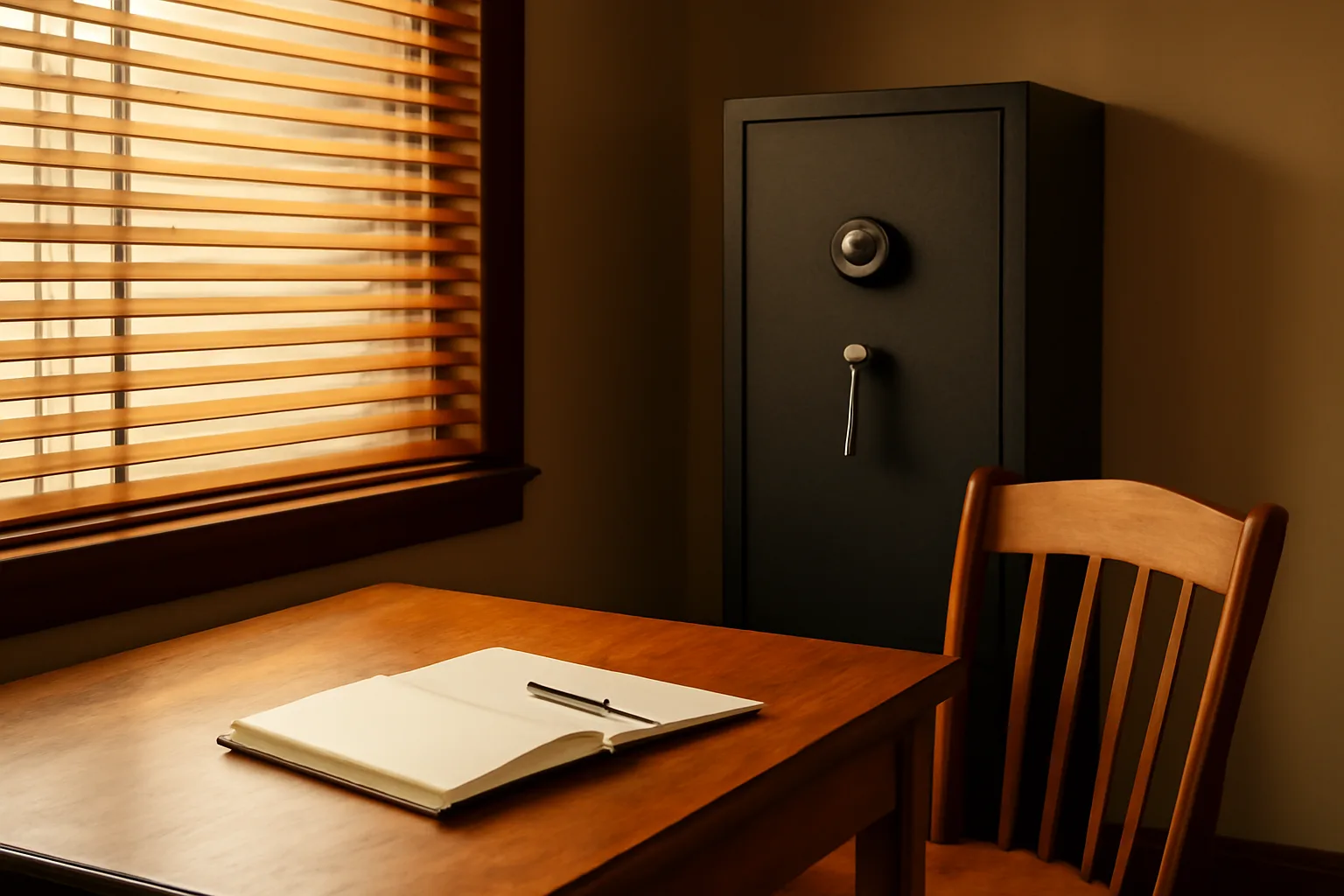
Second, set up your secure storage. ATF doesn't mandate a specific safe, but your IOI will judge whether your storage reasonably prevents unauthorized access. A quality gun safe bolted to the floor or wall is the standard.
Third, register on ATF's eLicensing portal at atfonline.gov. [10] This is where you complete Form 7 (Application for Federal Firearms License). You'll enter your personal information, premises address, proposed business name, and license type (Type 01 for a standard dealer).
Fourth, pay the $200 fee online at submission. [1]
Fifth, wait for ATF to assign your application to the Nashville Field Division. An IOI contacts you, usually by phone, to schedule the in-person compliance interview at your home.
Sixth, sit for the compliance interview. Show your A&D book setup, your 4473 procedures, your storage, and your plan for posting required notices (like the Importation and Verification of Firearms, Ammunition and Implements of War poster).
Seventh, receive your license in the mail. It comes as a paper certificate. Keep it accessible, because ATF inspectors may ask to see it.
If you want a pre-organized packet that walks Form 7 line by line and includes a bound book template and compliance checklist, FFLPath offers a Type 01 home-based packet for $199 at fflpath.com/start. Not required, but it saves time on the paperwork setup.
What are the most common reasons Alabama FFL applications get delayed or denied?
Delays and denials follow consistent patterns. Knowing them ahead of time is the best way to dodge them.
The most common cause of delay is an incomplete or incorrectly filled-out Form 7. Missing signatures, addresses that don't match exactly, or wrong responsible-person information all bounce the application back. Take your time on the form.
The second is a disqualifying criminal history. Under 18 U.S.C. § 922(g) and § 923, being a prohibited person (a felon, someone with a domestic violence conviction, someone under certain restraining orders, or someone adjudicated as mentally defective) makes you ineligible for an FFL. [9] ATF runs a background check on every responsible person on the application. If there's anything in your background, talk to an attorney before applying, not after a denial.
The third is premises problems. If your home sits in an HOA that bans the business or a city zoning district that doesn't allow commercial retail, ATF will deny the application. Get your local clearance before you pay the fee.
The fourth is failing to show you're "engaged in the business." If you can't lay out a real business plan in the compliance interview, the IOI may doubt you meet the statutory definition. Come with a clear answer about your business model, your target customers, and how you'll keep your records.
Denials can be appealed through ATF's administrative process, then federal court, but that's a long road. Getting the application right the first time is far cheaper.
How does Alabama compare to neighboring states for home-based FFLs?
Alabama sits in a favorable spot next to its neighbors: no state dealer license, no state-run background check, no state board to satisfy. Here's a direct comparison with adjacent states.
| State | State dealer license required? | State background check required? | Estimated added state cost |
|---|---|---|---|
| Alabama | No | No (NICS only) | $0 state fee |
| Georgia | No | No (NICS only) | $0 state fee |
| Florida | No | No (NICS only) | $0 state fee |
| Arkansas | No | No (NICS only) | $0 state fee |
| Tennessee | No | No (NICS only) | $0 state fee |
| Mississippi | No | No (NICS only) | $0 state fee |
All six states in Alabama's immediate neighborhood are NICS states where the dealer calls NICS directly. [11] None require a separate state dealer license. Compare Alabama to California or Illinois and the difference is dramatic. Those states run their own dealer licensing boards with hundreds of dollars in fees and extra compliance layers.
Compare Arkansas's home-based FFL rules and Georgia's setup if you're deciding between locations.
For anyone hunting a low-friction state to start a home-based FFL, Alabama is one of the easier environments in the country. The federal process is identical everywhere. Alabama just adds nothing on top.
What ongoing compliance do Alabama home-based FFLs need to maintain?
Getting the license is step one. Keeping it is the actual job.
Your A&D bound book has to stay current. Log every acquisition the day you receive the firearm. Log every disposition before or at the time of transfer. ATF inspectors have denied license renewals over sloppy record-keeping. [7]
Run NICS checks on every non-licensed transferee at the time of sale. You log the NTN (NICS Transaction Number) on the 4473. If NICS returns a "Proceed," you can complete the transfer. A "Denied" means you don't transfer and you keep the 4473. A "Delayed" lets you proceed after three business days if you choose, but you accept the risk.
Renew your FFL every three years. ATF mails a renewal notice to your address of record about 90 days before expiration. The renewal fee is $200. [1] Don't miss it. An expired FFL means you're unlicensed, and every transfer becomes a federal crime.
ATF compliance inspections happen. The first one typically lands within the first year. After that, ATF targets dealers by risk factors, but they can inspect any FFL during business hours without a warrant. [12] You don't have to consent to an inspection outside business hours, but refusing one during business hours can trigger license revocation proceedings.
Keep your address current with ATF. If you move, you need ATF approval before operating at the new address. You can't just start receiving guns at a new home. [6]
For people comparing compliance across states, the Idaho home-based FFL guide and the Colorado guide cover similar federal-only environments.
Frequently asked questions
Do you need a license for a home-based FFL in Alabama?
Yes. Any person dealing firearms for profit in Alabama, including from a home, needs a federal firearms license from ATF under 18 U.S.C. § 923. Alabama does not require a separate state dealer license on top of the federal one, so your ATF Type 01 license is the only required firearms dealer credential. You may also need a general business license from your city or county.
How much does a home-based FFL cost in Alabama?
The ATF Type 01 license fee is $200 for a three-year term. Alabama charges no state dealer licensing fee. You'll also spend on secure storage ($150 to $1,500+), a bound book ($20 to $60), and a local business license ($50 to $300 depending on your city). Total first-year realistic startup cost is roughly $450 to $2,000, depending on your storage choice and local fees.
How long does it take to get a home-based FFL in Alabama?
Plan for 60 to 120 days from submission to license in hand. ATF assigns Alabama applications to the Nashville Field Division, which must schedule an in-person compliance interview at your home. The interview scheduling plus post-interview processing accounts for most of the timeline. ATF provides no guaranteed processing time, and backlog in the Nashville office can push timelines longer.
Does Alabama have a state firearms dealer board?
No. Alabama has no state firearms dealer board and no state-issued firearms dealer license. The only licensing body that matters for an Alabama FFL is ATF's Federal Firearms Licensing Center. You'll interact with the Alabama Department of Revenue for sales tax registration, but that's general business compliance, not a firearms-specific board.
Can I run a home-based FFL in Alabama if I live in an HOA?
Maybe, but read your HOA's CC&Rs carefully before applying. Some Alabama HOAs prohibit commercial activity or firearm sales specifically. ATF requires you to certify that your premises complies with all local laws and governing documents. An HOA restriction doesn't automatically disqualify you, but if the HOA can take legal action against the business, ATF will have concerns.
What ATF field division covers Alabama?
Alabama is covered by the ATF Nashville Field Division, which also handles Kentucky, Mississippi, and Tennessee. Your IOI (Industry Operations Inspector) for the compliance interview comes from that division. The Nashville Field Division's contact information is listed on ATF's website under field offices.
Do I need to register for Alabama sales tax as an FFL?
Yes. If you're selling firearms or ammunition to Alabama residents, you're required to collect state sales tax and remit it to the Alabama Department of Revenue. Registration is free through ALDOR's My Alabama Taxes portal. Alabama's state sales tax rate is 4 percent, and local rates add on top, often totaling 8 to 10 percent in cities like Birmingham or Huntsville.
Can I do transfers only (no inventory) with an Alabama home-based FFL?
Yes. A transfer-only model, where customers ship firearms to your address and you run the 4473 and NICS check for a fee, is legal and common for home-based FFLs in Alabama. Typical transfer fees run $25 to $50 per firearm. You still need all the same federal records and a proper bound book. ATF expects you to be genuinely engaged in business, so track your transactions consistently.
What records does a home-based FFL in Alabama have to keep?
Federal law requires an Acquisition and Disposition (A&D) bound book logging every firearm you acquire and transfer. You must also keep ATF Form 4473 for every transfer to a non-licensed buyer for at least 20 years. Alabama has no state record-keeping requirements beyond what federal law mandates. If you close your business, all records go to ATF's Out-of-Business Records Center.
What are the most common reasons an Alabama FFL application is denied?
The main reasons are: a disqualifying criminal history (felony conviction, domestic violence conviction, or adjudicated mental defect), an incomplete or incorrectly completed Form 7, a premises that violates local zoning or HOA rules, and failure to demonstrate you're genuinely engaged in the business. Background issues are the most serious; consult an attorney before applying if your history is unclear.
How often does ATF inspect home-based FFL holders in Alabama?
ATF typically conducts a compliance inspection within the first year of licensing. After that, the frequency depends on ATF's inspection priorities and any issues flagged in prior inspections. There's no fixed schedule. ATF can inspect any FFL at any time during business hours without a warrant. Keeping your bound book current and 4473s properly completed is your best protection.
What happens if my home-based FFL expires in Alabama?
An expired FFL means you're operating without a license, a federal crime under 18 U.S.C. § 922. ATF mails renewal notices about 90 days before expiration. You must renew and pay the $200 fee before the expiration date. If you miss the deadline, you reapply from scratch, which means the full application process and timeline again.
Can a home-based FFL in Alabama sell guns at gun shows?
Yes. An Alabama FFL holder can sell at gun shows in Alabama and other states, as long as they comply with the laws of the state where the show is held. You must have your license with you at the show, maintain your bound book for all transactions, and run NICS checks on non-licensed buyers. Gun show sales are covered under your existing FFL, no separate permit required.
Is there a minimum number of gun sales required to keep an Alabama FFL active?
ATF has not published a specific minimum transaction number. The standard is whether you're 'engaged in the business' under 18 U.S.C. § 921(a)(21), meaning you're buying and selling with profit intent on a regular basis, more than occasionally. A dealer doing transfers consistently meets that standard. ATF IOIs do ask about your business volume and plan during compliance interviews.
Sources
- ATF, Federal Firearms License (FFL) Fees: Type 01 FFL costs $200 for a three-year license; Type 03 costs $30; Type 07 costs $150
- Alabama Department of Revenue, Sales & Use Tax: Alabama requires dealers to register for and collect sales tax; state rate is 4 percent
- ATF, Federal Firearms Licensee Quick Reference and Best Practices Guide: ATF processes FFL applications and conducts compliance interviews through field divisions
- ATF, Nashville Field Division: The ATF Nashville Field Division covers Alabama, Kentucky, Mississippi, and Tennessee
- Alabama Legislature, Code of Alabama Title 13A (Criminal Code): Alabama Code Title 13A governs criminal offenses including firearms; no separate state firearms dealer license created
- ATF, Form 7 (Application for Federal Firearms License) Instructions: Form 7 requires certification that the premises complies with state and local law; address changes require ATF approval before operating
- ATF, 27 CFR Part 478 - Commerce in Firearms and Ammunition: Federal regulation requires FFLs to maintain an Acquisition and Disposition record for every firearm; digital records are accepted if they meet regulatory format
- ATF, ATF Form 4473 (Firearms Transaction Record): Form 4473 is required for every over-the-counter transfer to a non-licensed buyer and must be retained at least 20 years
- Legal Information Institute, 18 U.S.C. § 921 and § 923 - Definitions and Licensing: 18 U.S.C. § 921(a)(21) defines 'engaged in the business'; § 923 requires FFLs for dealing; § 922(g) lists prohibited persons
- FBI NICS, Point of Contact States: Alabama, Georgia, Florida, Arkansas, Tennessee, and Mississippi are NICS states where dealers contact NICS directly
- ATF, 18 U.S.C. § 923(g) - Inspection Authority: ATF may inspect FFL premises during business hours without a warrant; 18 U.S.C. § 923(g) governs inspection authority