Last updated 2026-08-18
TL;DR
California has no single home-based FFL board. You need an ATF federal license, a DOJ Certificate of Eligibility, a CDTFA seller's permit, local business and dealer licenses, and a spot on DOJ's centralized list. Many cities block a house shop. ATF charges $200 for a three-year Type 01. Confirm local fees and timing with each agency. No approval is guaranteed.
Do you need a license for a home-based FFL in California?
Yes. A home-based FFL in California needs a federal firearms license and the full state dealer stack. Occasional private transfers still route through a licensed dealer. If you buy and sell as a business from the house, the licenses come before the first business transfer, not after.
California Penal Code section 26500 states: "No person in this state shall sell, lease, or transfer firearms unless the person has been issued a license pursuant to Article 1 (commencing with Section 26700) of Chapter 2." [1]
Federal law is its own gate. 18 U.S.C. 923 requires a license for a dealer in firearms, and ATF issues that license. [2]
California does not treat the ATF card as enough. Penal Code 26700 only calls you a dealer if you also hold the local licenses, the seller's permit, the DOJ certificate of eligibility, and a place on the centralized list. [3]
A kitchen table is not a loophole. ATF will consider a residence only if state and local law allow the business at that address. Your city can still say no.
If you are not dealing, do not open a shop. Use a real dealer for a personal DROS transfer and keep your money.
How much does a home-based FFL cost in California?
The only federal number I will hang my hat on is ATF's published Type 01 fee: $200 for three years. Everything else in California is either a posted state fee that changes, or a city fee you have to read locally. Do not budget from a blog's total-cost graphic.
ATF's fact sheet lists Type 01 dealer and Type 02 pawnbroker licenses at $200, Type 07 manufacturer at $150, Type 03 collector at $30, and destructive device dealer licenses at $3,000, each for a three-year term. [4]
California adds cost layers ATF does not collect. You pay for a Certificate of Eligibility through DOJ. You pay Live Scan. You pay whatever your city or county charges for a firearms dealer license and a regular business tax certificate. You get a seller's permit from the California Department of Tax and Fee Administration. Some of those registrations have no application fee. Some cities charge a lot for a dealer permit. I will not invent a city number. Call the licensing authority named in Penal Code 26705 and ask for the current fee sheet. [5]
| Credential | Agency | Published amount | Confirm |
|---|---|---|---|
| Type 01 FFL (3 years) | ATF | $200 | ATF fee fact sheet |
| Seller's permit | CDTFA | often no signup fee | CDTFA seller permit FAQ |
| Certificate of Eligibility | CA DOJ | confirm current fee | DOJ COE page |
| Local dealer license | city or county | varies | PC 26705 desk |
| Excise on qualifying retail sales | CDTFA | 11% in the 2024 statute | RTC 36011 |
After you open, retail sales of firearms, firearm precursor parts, and ammunition face California's excise tax. The statute imposed an 11 percent tax on those gross receipts beginning July 1, 2024. Confirm the rate in force with CDTFA before you price a gun. Ordinary sales tax still applies. [6]
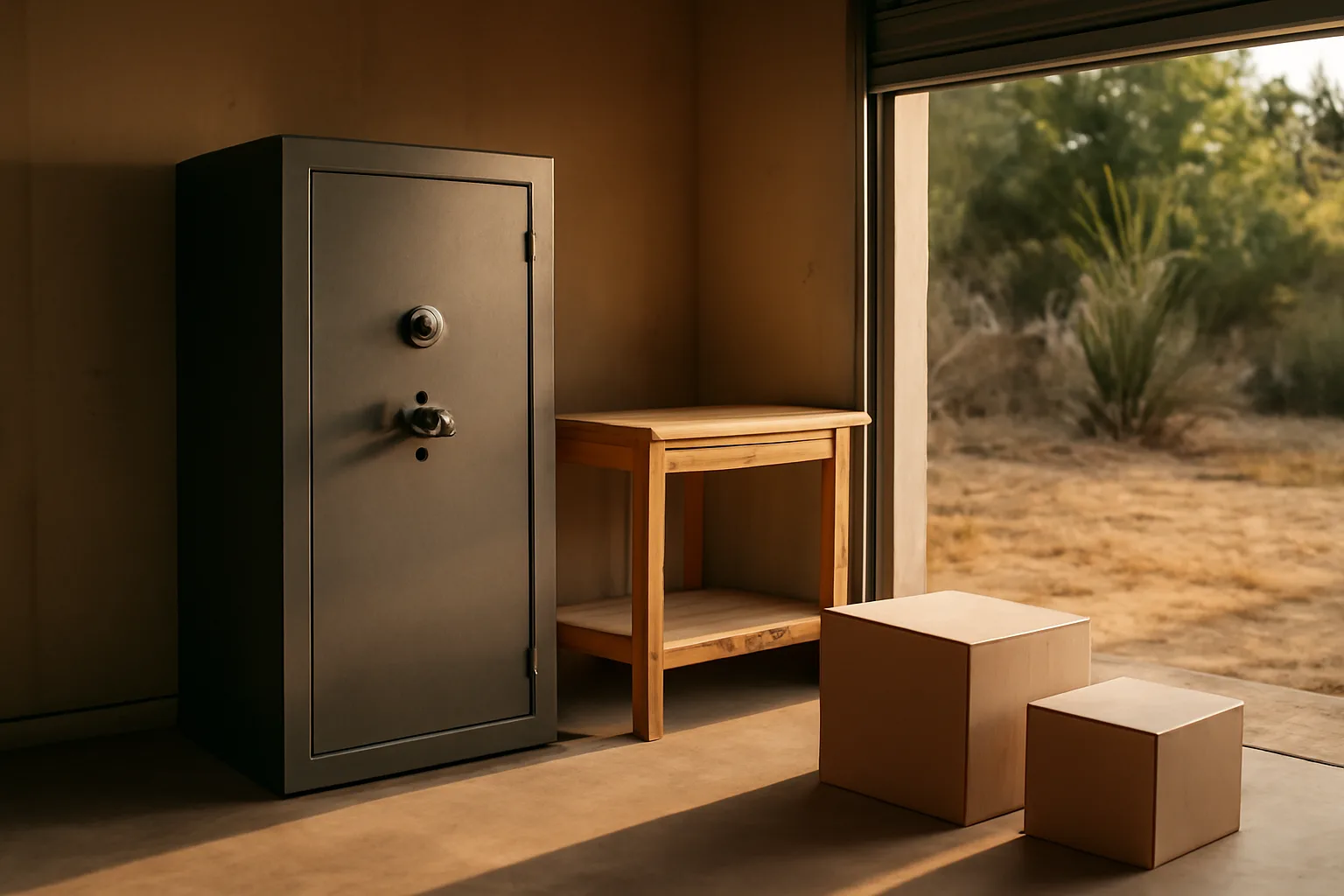
Build-out is the silent budget. A home shop that fails ATF inspection for storage, public access, or inventory security can cost more than the licenses. A lockable room and a proper safe are not optional if you want the investigator to leave happy. I would not spend on neon or a fancy website. I would spend on the door, the safe, and someone who actually reads your zoning code.
If you want a paper checklist in one place, FFLPath publishes a $199 one-time Home-Based Type-01 Packet at /start. It is a publisher packet, not a filing service and not a law firm. This page still works if you never click that.
How long does a home-based FFL take in California?
Nobody should sell you a guaranteed week count. ATF reviews Form 7 (or the eForm), runs prints, and sends an Industry Operations Investigator to the premises. California DOJ has to issue the COE. Your city or county has to act on the local dealer license. Those clocks do not start on the same day, and they do not finish together.
I have not seen a current, official ATF statewide average that I trust enough to print as the wait time. Field divisions differ. Ask the ATF field office that covers your county for a current estimate, then add time for the inspection visit itself. [11]
COE timing depends on Live Scan clearing. DOJ describes the COE on its Certificate of Eligibility page and processes applications in CFARS. [7] Confirm current processing with DOJ. Do not use a forum anecdote as your lease start date.
Local dealer licenses can be the long pole. Some agencies treat them like any business permit. Some want a hearing, neighbor notice, or a conditional use permit because the site is a house. A CUP can take months. A zoning no is not a delay. It is a stop.
Sequence I'd use: zoning letter first, then COE and seller's permit, then the local dealer application, then ATF Form 7 once the premises and local path are real. Filing ATF first on a house the city will reject wastes the $200 and your time.
No approval or timing guarantee exists. Anyone who sells you a fixed-day California home FFL is guessing.
Is there actually a home-based FFL board in California?
No. California does not run a single home-based FFL board that stamps kitchen-table dealers. People say "board" because other trades have one counter. Firearms dealing is a stack of agencies.
ATF is federal. The California Department of Justice Bureau of Firearms runs the COE and the centralized list. CDTFA runs the seller's permit and the firearms excise tax. The duly constituted licensing authority of the city or county grants the local firearms dealer license. Planning and code enforcement decide if a house can be the premises.
Penal Code 26705 tells that local licensing authority to accept applications and says it may grant licenses for the place specified in the license. "May" is doing a lot of work. It is not "shall." [5]
If you came from a state with no extra dealer board, this feels thick. It is the design. home-based FFL in Arkansas is closer to ATF plus local zoning. California is not that.
What does Penal Code 26700 require before you count as a dealer?
Penal Code 26700 is the checklist. You are a dealer or licensee under that article only if you have all of the following: a valid federal firearms license; any regulatory or business license the local government requires; a valid seller's permit (the statute still names the State Board of Equalization, which is now CDTFA); a DOJ certificate of eligibility; a local dealer license in the format section 26705 describes; and a listing on the centralized list in section 26715. [3]
That is six gates. Pass five and fail one, and you are not a California dealer.
| 26700 item | What it is | Who issues it |
|---|---|---|
| Federal firearms license | Type 01 for most home dealers | ATF |
| Local business or regulatory license | city tax certificate and any extra permit | city or county |
| Seller's permit | sales tax permit | CDTFA |
| Certificate of Eligibility | eligibility credential | CA DOJ |
| Local firearms dealer license | the 26705 license for a named place | police chief or sheriff |
| Centralized list | statewide dealer roster | CA DOJ |
The seller's permit is ordinary. CDTFA issues it so you can collect sales tax. [8] You register the business, including a home address if that is the premises. A home address on a seller's permit does not override a zoning ban.
The local business license is the generic city tax certificate. The local firearms dealer license is the special one. Do not confuse them.
I would print 26700, highlight each lettered item, and write the agency name next to it. Then I would not file anything until I knew which counter owns each line.
Can you run an FFL out of a house in California?
Sometimes, if local law allows it and ATF accepts the premises. Often, no.
ATF's published Q&A on home premises says a person may obtain an FFL to conduct business from their home if the premises meet the Gun Control Act and the regulations, "and the business is not prohibited by State law or local ordinance." [9]
Read that last clause twice. California state law does not give you a right to a residential gun shop. Penal Code 26805 says the business of a licensee shall be conducted only in the buildings designated in the license, with limited exceptions for warehouse delivery and gun shows. [10] The designated building can be a house only if the local license names that house and zoning allows the use.
Plenty of California cities treat firearms sales as a restricted commercial use. Home occupation rules often ban retail customers and inventory of regulated goods. An HOA covenant can also forbid a business with customer traffic. ATF does not override CC&Rs. The city does not either.
If customers cannot legally come to the door, your business model has to match what the occupancy allows. A transfer-only shop with no storefront traffic is still a firearms business for zoning in many towns. Ask planning in writing. Get the answer on letterhead. Verbal "should be fine" is how people lose application fees.
ATF still has to accept the room. Investigators look at security, public access, and whether they can inspect without turning your hallway into a scene. 27 CFR 478.41 is the federal license-required rule that sits under all of this. [13] A spare bedroom with a flimsy closet lock is a weak plan.
What does the local police chief or sheriff decide?
The local licensing authority under Penal Code 26705 is usually the police chief or the sheriff, depending on whether the premises sit in a city or in the unincorporated county. That office accepts the dealer application and may grant a license for a specific place. [5]
They look at you, the address, and local ordinances. Some agencies use a short form. Some want prints you already gave Live Scan, a plot plan, proof of the FFL application, proof of the COE, and a floor plan showing where guns sit overnight.
If your city council banned firearms retailers, the chief cannot save you. If the city allows it only in a commercial zone, a house in an R-1 tract is done.
I would call the licensing desk before I paid ATF. Ask three things. Do you issue PC 26705 dealer licenses for a residence? What is the current fee? What is the current packet? Write down the name of the person who answered.
Comparisons help calibrate how strict this is. home-based FFL board in Connecticut and home-based FFL board in Illinois also stack state rules on top of ATF. home-based FFL board in Arizona is a different climate.
What is a California Certificate of Eligibility?
A COE is DOJ's certificate that you are eligible to possess firearms, and as DOJ now describes it, ammunition and precursor parts, under state and federal law. You apply through CFARS and complete Live Scan. Penal Code 26700 requires a COE before you count as a dealer. [3] [7]
DOJ's Certificate of Eligibility page states: "A Certificate of Eligibility (COE) is a certificate issued by the California Department of Justice (DOJ) that states the holder of the certificate is eligible to possess firearms, ammunition, and/or firearm precursor parts pursuant to state and federal law." [7]
Confirm the current COE application fee on that DOJ page. I will not print a dollar figure I cannot stand behind.
Staff who handle firearms for a dealer generally need their own COE. DOJ's COE page lists the roles that require one. Do not put an uncredentialed roommate on the counter.
A COE is not a dealer license. It is a background credential. You still need the rest of the 26700 stack.
What is the centralized list of firearms dealers?
DOJ keeps a statewide list of people licensed under the dealer article. Penal Code 26715 is that list. You are not a dealer under 26700 until you are on it. [12] [3]
The list is how DOJ and local agencies know who may run DROS transfers. If you are not on the list, you do not do California dealer transfers. Being on the list is not optional branding. It is the last checkbox.
DOJ can refuse or remove people who lose a required credential. Keep the FFL, the COE, the local license, and the seller's permit current. Lapse one, and the list status follows.
Ask DOJ Bureau of Firearms for the current centralized list application steps and any annual fee. Confirm. Do not copy a 2018 PDF you found in a forum.
What taxes apply after you open?
You collect California sales tax on taxable sales. You need the CDTFA seller's permit to do that. [8]
On top of sales tax, California imposed an 11 percent excise tax on a retailer's gross receipts from retail sales of firearms, firearm precursor parts, and ammunition, beginning July 1, 2024. That is in Revenue and Taxation Code section 36011. Confirm the current rate and any exemptions with CDTFA before you tag a price. [6]
Federal income tax and self-employment tax apply if you are profitable. I am not your CPA.
The excise tax is why a few transfers from the garage still need a real ledger. Transfer fees, parts, and ammo can all touch this statute depending on what you sell. Read the statute. Guessing is expensive.
What paper do you keep in the first year?
ATF wants the bound book (or an approved electronic A&D record), 4473s, and the ability to show inventory on demand. The investigator can inspect a home premises. Hide the safe behind holiday decorations and you will have a bad afternoon.
California adds DROS records, COE copies for you and for staff, the local license, and the usual business records CDTFA may ask for. Penal Code 26805 and the rest of the dealer article also set conduct rules for the licensed building. [10]
I keep a single binder, or a single encrypted folder plus a paper backup, with the FFL, COE, local dealer license, business tax certificate, seller's permit, lease or deed, zoning letter, and the latest inventory printout. Inspectors should not watch you dig through a junk drawer.
Year-one training is not a California board course with a diploma wall. It is ATF's form instructions, the 4473, and DOJ's dealer procedures. Paid classes vary. Some are worth a day. Many are a slideshow. I would read the primary forms first, then buy a class only if I still could not run a transfer without guessing.
What would I actually do before I spend money?
I would not file ATF first. I would walk the address.
Get the zoning use in writing. Read the home occupation ordinance. If the city bans firearms retail in a residence, stop. You just saved $200 and a lot of pride.
If zoning is possible, ask the police or sheriff licensing desk whether they have ever issued a 26705 license to a home. If the answer is no, believe them.
Then do COE and Live Scan. Register the seller's permit. Assemble the local dealer packet. Only then submit ATF Form 7 for the same address that is on the local papers. [11]
Premises need to look like a business ATF can inspect. A locked room, a real safe, a way to keep personal guns and business inventory from turning into a story, and a plan for 4473 privacy if you live with other people.
Skip engraved signs. Skip a booth at a show. Skip inventory until the licenses exist. Buying a pile of pistols to be ready before the FFL issues is how people create a separate legal problem.
For a different state's stack, see home-based FFL board in Florida, home-based FFL board in Colorado, or home-based FFL board in Hawaii. None of those pages replace your city clerk.
How does California compare with other states?
California is on the heavy end. You still start with ATF, like everyone else. Then you add COE, a local dealer license, centralized list placement, DROS, and the excise tax. A home-based FFL in California is not a federal-only project.
People search for a home-based FFL California board because they want one counter. There isn't one. ATF charges $200 for a three-year Type 01 dealer license, per its firearms license fee fact sheet. [4] That fee does not buy the state stack.
Other states run lighter or just differently. Use those pages as contrast, not as a filing plan.
FFLPath is an independent publisher. It is not a law firm and not a company that files your FFL. Confirm every current fee and form with ATF, DOJ, CDTFA, and your local licensing authority.
Frequently asked questions
Do you need a license for home-based FFL in california?
Yes. You need an ATF federal firearms license plus California's dealer stack under Penal Code 26700. That includes a DOJ Certificate of Eligibility, a CDTFA seller's permit, local business and dealer licenses, and placement on DOJ's centralized list. Private one-off sales are not a dealer shop. Confirm local rules with the 26705 licensing authority.
How much does home-based FFL cost in california?
ATF publishes a $200 fee for a three-year Type 01 license. California then adds COE, Live Scan, local dealer and business licenses, and later an excise tax on qualifying retail sales. City dealer fees vary widely. Confirm each current amount with ATF, DOJ, CDTFA, and your city or county. There is no honest single statewide total.
How long does home-based FFL take in california?
There is no honest single calendar. ATF reviews Form 7 and inspects the premises. DOJ processes the COE after Live Scan. The city or county may add a hearing or a conditional use permit. Ask each agency for its current estimate. Anyone promising a fixed number of days is guessing. No approval is guaranteed.
Can I get an FFL at my California house if ATF says yes?
Not if the city or county forbids the use. ATF will consider a home only if state and local law allow the business at that address. Many California home occupation rules block firearms retail. Get zoning in writing before you pay ATF. A federal yes does not override a local no.
What is a Certificate of Eligibility for a California dealer?
A COE is DOJ's certificate that you are eligible to possess firearms, ammunition, and precursor parts under state and federal law. Dealers need one under Penal Code 26700. You apply through CFARS and complete Live Scan. Confirm the current fee on DOJ's COE page. A COE is not itself a dealer license.
Does California have a firearms dealer board?
No single board. ATF issues the federal license. DOJ runs the COE and the centralized list. CDTFA runs the seller's permit and the excise tax. The local police chief or sheriff acts as the Penal Code 26705 licensing authority. Planning decides if a house can be the shop.
Who is the local licensing authority for a dealer license?
Penal Code 26705 points to the duly constituted licensing authority of the city, county, or city and county. In practice that is usually the police chief inside a city and the sheriff in unincorporated areas. That office may grant a license for a named place. Call them for the current packet and fee.
What is the centralized list of firearms dealers?
It is DOJ's statewide roster under Penal Code 26715. Penal Code 26700 treats you as a dealer only after you are on that list. Without it you do not run California DROS dealer transfers. Ask Bureau of Firearms for the current application steps and any annual fee.
Do my employees need a COE?
Staff who handle firearms for a California dealer generally need their own Certificate of Eligibility. DOJ's COE page lists the roles that require one. Do not put an uncredentialed helper on inventory or the counter. Confirm current employee rules with DOJ before anyone else touches a business gun.
Is the 11 percent excise tax extra sales tax?
It is a separate excise on qualifying retail gross receipts for firearms, firearm precursor parts, and ammunition. The statute imposed 11 percent beginning July 1, 2024. Ordinary sales tax still applies in the usual way. Confirm the rate in force and any exemptions with CDTFA before you print a price tag.
Can an HOA block a home-based FFL?
Yes, if the covenants ban a home business, customer traffic, or this use. ATF does not override CC&Rs. The city does not either. Read the recorded restrictions and get a written answer from the association before you file. A neighbor complaint after the fact is a bad way to learn this.
Should I apply to ATF before I talk to the city?
No. I would get zoning in writing, then ask the 26705 desk if they issue a home dealer license, then do COE and the seller's permit, then file ATF for that same address. Paying ATF first on a banned house wastes the $200 fee and your time.
What FFL type do most home dealers file?
Most people dealing firearms from a home file ATF Type 01, the dealer license other than destructive devices. ATF publishes that fee at $200 for three years. Manufacturing or importing is a different type and a different fee. Match the type to the actual activity, then confirm the current fee on ATF's fact sheet.
Does a seller's permit make me a firearms dealer?
No. The CDTFA seller's permit lets you collect sales tax. Penal Code 26700 still requires the federal FFL, the COE, the local dealer license, any other local business license, and centralized list placement. A home address on a seller's permit does not fix a zoning ban.
Sources
- California Penal Code section 26500: California law forbids selling, leasing, or transferring firearms without a license issued under the dealer article that begins at section 26700.
- 18 U.S.C. § 923: Federal law requires a license for a dealer in firearms and sets the ATF licensing framework.
- California Penal Code section 26700: A California dealer must hold a federal FFL, required local licenses, a seller's permit, a DOJ certificate of eligibility, a local dealer license, and a centralized list listing.
- ATF fact sheet on FFL types and fees: ATF publishes a $200 fee for a three-year Type 01 dealer license, with other types listed at $30, $150, or $3,000.
- California Penal Code section 26705: The local city or county licensing authority accepts dealer applications and may grant a license for the place specified.
- California Revenue and Taxation Code section 36011: Beginning July 1, 2024, an 11 percent excise tax is imposed on a retailer's gross receipts from retail sales of firearms, firearm precursor parts, or ammunition.
- CDTFA seller's permit FAQ: CDTFA issues the California seller's permit used to register for sales tax collection.
- ATF Q&A on obtaining an FFL to conduct business from a home: ATF may license a home premises only if the GCA and regulations are met and the business is not prohibited by state law or local ordinance.
- California Penal Code section 26805: A licensee's firearms business must be conducted only in the buildings designated in the license, with limited statutory exceptions.
- ATF page on applying for a federal firearms license: ATF is the agency that receives the FFL application and issues or denies the federal license after review and premises inspection.
- California Penal Code section 26715: DOJ maintains the centralized list of firearms dealers referenced in the Penal Code 26700 dealer definition.
- 27 CFR 478.41: Federal regulation requires the ATF license for engaging in the business of a firearms dealer.