Last updated 2026-08-18
TL;DR
Arkansas has no state firearms dealer license. You need one thing from the state's side: nothing. Federally, you need a Type 01 FFL from ATF, which costs $200 for three years and is non-refundable. Approval runs 2 to 4 months after you mail ATF Form 7, two fingerprint cards, and a photo. Check local zoning first, and register for a free Arkansas sales tax permit if you'll sell retail. No state waiting period slows you down.
Do you need a license for a home-based FFL in Arkansas?
No. Arkansas has no state firearms dealer license at all. The only thing standing between you and legally selling guns as a business is a Federal Firearms License (FFL) from the Bureau of Alcohol, Tobacco, Firearms and Explosives (ATF). ATF's own compilation of state firearms laws lists no separate licensing statute for Arkansas dealers [1].
That skips an entire layer of paperwork that FFLs in California or New Jersey have to grind through. You still follow every federal rule, file ATF Form 7, pay the $200 fee, and pass the background check. But the state won't hand you a second application or a second bill.
A home address gets treated like any other premises as long as it clears your local zoning and business rules (more on that below). Want to see how a neighbor handles it? Our guide on how to start a home-based FFL in Alabama covers another state with the same no-license stance.
How much does a home-based FFL cost in Arkansas?
The ATF fee for a Type 01 dealer license (what most home-based sellers use) is $200 for the initial three years, non-refundable [2]. Renewals drop to $90 for the next three years. Everything else is local and small.
Here's a realistic startup budget:
- ATF application fee: $200
- Fingerprint cards: free from ATF, but local agencies charge $10 to $50 to roll your prints
- Passport-style photo: $5 to $15
- Arkansas sales and use tax permit: free from the Arkansas Department of Finance and Administration (DFA) [3]
- Local business license: usually $15 to $150 a year, depending on your city; Little Rock, for example, charges by gross receipts [4]
Some cities may want a local criminal background check, but the FBI check tied to your fingerprints already covers federal disqualifiers. Total startup lands between $230 and $415, before inventory or a safe.
After your FFL issues, you collect and remit Arkansas sales tax on every retail sale: 6.5% state plus local city and county tax [5]. For a side-by-side, compare the home-based FFL license in Arizona.
How long does it take to get a home-based FFL in Arkansas?
Plan on 2 to 4 months from the day ATF receives a complete application. ATF's public FAQ puts it plainly: "Processing times average approximately 60 days," and in practice most home-based applicants see the license land inside 120 days depending on field office workload [6].
The clock starts when you mail Form 7 with your fingerprint cards and photo. ATF cashes your check and sends an acknowledgment within a few weeks. Then an Industry Operations Investigator (IOI) calls to set up an on-site interview. The IOI comes to your home, looks at your storage and recordkeeping setup, and confirms you understand the federal rules. After the visit, the IOI writes a report. Clean file, and your license shows up in the mail roughly 30 to 45 days later.
Delays come from three places: errors on the form, smeared or unreadable fingerprints, and fuzzy zoning documents. Make your business name and address match your local business license exactly. That one detail trips up more applicants than you'd think.
Step-by-step: How to start a home-based FFL in Arkansas
1. Verify your local zoning. Call your city or county planning department and ask whether a home business that sells firearms with no walk-in traffic is allowed. Some Arkansas cities take a home occupation permit; others want a conditional use permit. If you rent, get your landlord's written OK.
2. Get a sales tax permit. Register with the Arkansas DFA online for free [3]. You need this to collect and remit sales tax.
3. Secure your premises. ATF wants a safe or lockable storage for firearms and a set place for your records. It doesn't have to be a separate building, but the IOI will look.
4. Complete ATF Form 7. Download it from ATF.gov [7]. Pick "Individual" if you're the sole owner. Mark "Type 01, Dealer in Firearms." Use your home address for the premises. Your mailing address can match or be a P.O. Box if your locality allows it.
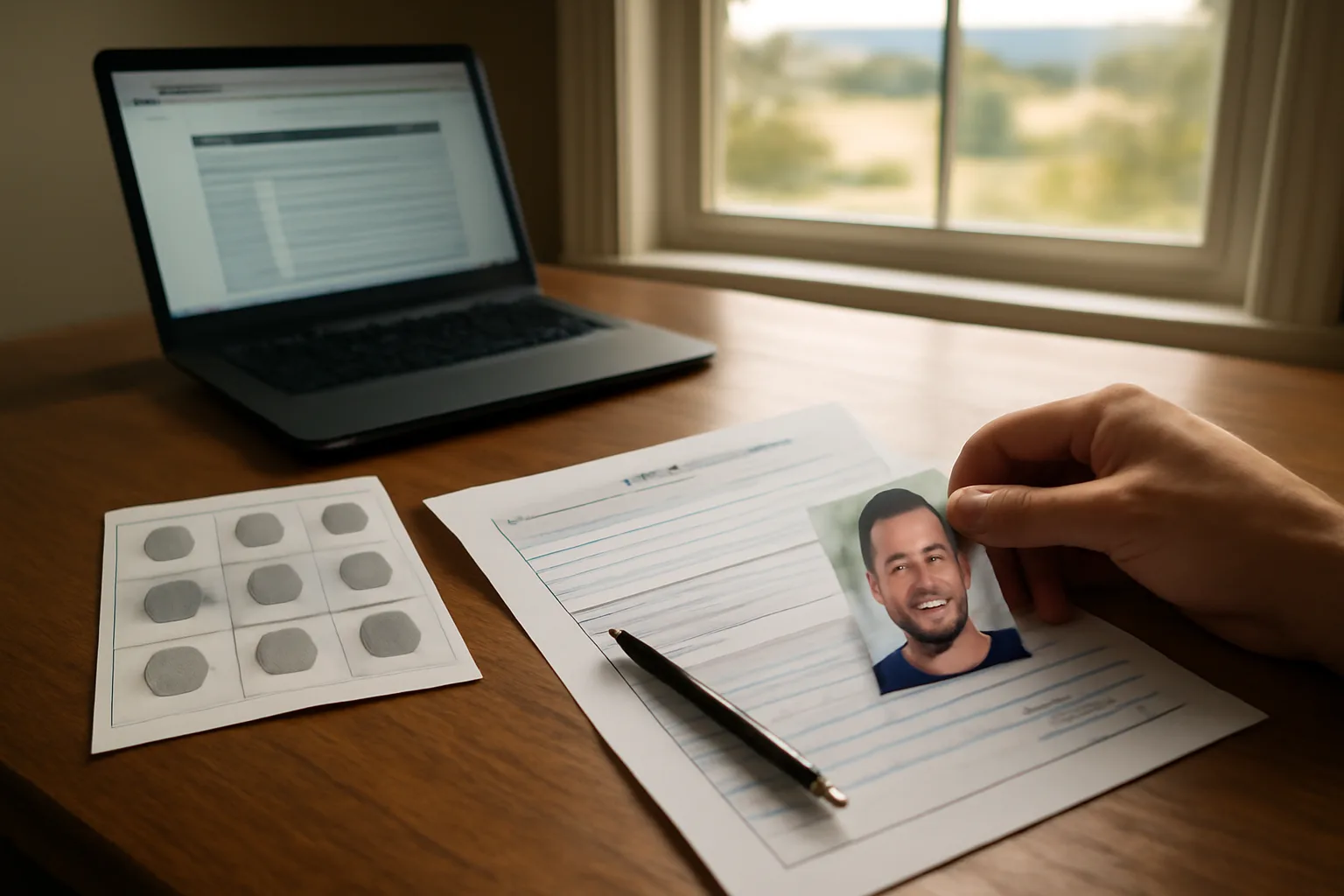
5. Get fingerprints and a photo. Two FD-258 fingerprint cards (order free from ATF) and a 2x2 inch passport photo attached to the form. A law enforcement agency or an ATF-approved vendor has to roll the prints. Arkansas sheriff's offices usually do it for a small fee.
6. Mail the packet. Send the completed Form 7, both fingerprint cards, the photo, and a check or money order for $200 to the address on the form. Keep copies of everything.
7. Prepare for the IOI interview. Expect questions on your business hours, how you'll track inventory, and your grasp of federal law. A written business plan and a copy of the ATF Federal Firearms Regulations Reference Guide help. The interview usually runs under an hour.
8. Wait for the license. Once approved, the FFL arrives by mail. You can start operating as soon as the physical license is posted at your premises.
Want a checklist that's already run this gauntlet with hundreds of first-timers? The FFLPath Home-Based Type-01 Packet ($199 one-time) includes the forms plus Arkansas-specific notes.
What ATF forms do I submit for a home-based FFL?
One. You file ATF Form 7 (Application for Federal Firearms License) [7]. Same form no matter where you live or whether you work from home. It asks for your business name, premises address, license type, and background info. You include two FD-258 fingerprint cards and a 2x2 photo. No extra ATF forms apply to a home-based FFL.
On Form 7, check box "01" for Dealer in Firearms (which includes gunsmithing). You'll answer questions on citizenship, criminal history, and mental health adjudications. Every answer has to be true. A false statement is a federal felony.
You mail the packet to the ATF Federal Firearms Licensing Center in Martinsburg, West Virginia. There's no online option for Form 7 that skips the mailed fingerprints, so plan on a physical submission.
Can I run a firearms business from my home in Arkansas?
Yes. Federal law allows home-based FFLs, and Arkansas doesn't ban them. The real gatekeeper is local zoning. Arkansas Code section 14-1-101 blocks cities and counties from regulating firearm ownership, transfer, or possession, but it does not stop them from enforcing ordinances that limit home businesses [8]. So your ability to operate from home rides on your local land use rules.
Live in an unincorporated area? County zoning may be light, and plenty of rural Arkansas counties put no restrictions on home businesses at all. In Fayetteville or Jonesboro, you'll probably need a home occupation permit that bans exterior signs, customer traffic, and hazardous materials. An FFL that ships to other FFLs and holds no retail showroom hours often reads as a low-impact home business. Call your planning department and ask the direct question: do I need a permit for a home business with no customer visits that ships products?
If you rent, your lease may forbid business activity. ATF doesn't require landlord approval, but breaking your lease can get you evicted. Get written consent. For a harder case, see how to start a home-based FFL in California, where state-level hurdles make home operations much tougher.
What are the Arkansas-specific rules for FFL holders?
Beyond the federal requirements, Arkansas asks for very little. No state license. No mandatory state background check past the NICS check you'll run yourself. No waiting period between purchase and delivery [9]. You don't report sales to any state agency except for tax purposes.
The one real state duty is sales tax. Arkansas treats retail firearm sales as subject to its gross receipts tax. You apply for a free Arkansas Sales and Use Tax Permit, collect at the combined state and local rate, and file monthly or quarterly based on volume. The state rate is 6.5%, and local city and county taxes can push the total to roughly 9% to 11% in many areas [5]. You charge the correct rate for the location of the sale.
Know the private-transfer landscape too. As an FFL, you run a background check on anyone you transfer a firearm to. Private sellers who aren't licensees don't have to under Arkansas law [9]. That doesn't touch your operations, but it's good to understand. The home-based FFL license in Alabama guide shows a similarly light state touch.
Will I need a business license in my local city?
Probably. Most Arkansas cities require a general business license for anything operating inside city limits, home-based included. Fees are usually modest, $15 to $150 a year, and often scale with gross receipts. Little Rock's Business License Division sets fees by a revenue table and requires annual renewal [4]. Your home-based FFL is a business, so it needs to register.
Look on your city's website for a "business license" or "occupational license" page. A few cities also want a certificate of occupancy or a fire inspection for home businesses storing inventory, though that's uncommon for a small FFL with no public access.
Here's the stakes: ATF requires you to comply with all state and local laws. Operating without a required local license can bring fines and put your FFL at risk. Sort it before you apply.
What happens during the ATF interview for a home-based FFL?
The IOI interview rattles most first-timers, but it's straightforward. The investigator calls to schedule. They come to your home, show credentials, and spend about 30 to 60 minutes. They want to see secure firearm storage (a locked safe or cabinet) and a working system for your acquisition and disposition (A&D) records. Expect questions on prohibited persons, transfer procedures, and recordkeeping.
One Arkansas-specific tip: if you're rural and the nearest office is far, stay flexible on scheduling, since the investigator may pair your visit with other inspections in the area. The IOI will ask about local business or zoning approvals, so have any permits on hand. They'll also confirm your business hours are sane (not 2 a.m.).
After the visit, they write a report and send it to the licensing center. Most rejections trace back to false statements on the application or a criminal record that surfaces in the background check, not to the interview itself.
Home-based FFL renewal in Arkansas: what changes?
Your first FFL runs three years. Before it expires, ATF mails a renewal application (ATF Form 8 Part II) to your address of record. The Type 01 renewal fee is $90 for another three years [2]. You submit it with a fresh set of fingerprints and a new photo, same as the first time. Arkansas adds no state renewal requirement.
Keep your local business license and sales tax permit current, since most of those renew too. An expired local license can put your FFL in jeopardy.
Renewal usually takes a couple of months, so don't wait until the final week. Let the FFL lapse and you have to stop all firearm operations immediately and reapply as a new applicant, which resets the whole process and costs the full $200 again.
How to avoid common application rejections in Arkansas
The top reason for denial is failing to show the business is lawful at the location. If your zoning doesn't allow home businesses, or you can't produce a certificate of occupancy when your city wants one, ATF rejects the application. Other regulars: a Form 7 with blank fields, fingerprint cards that are smeared or badly rolled, and undisclosed criminal history. An Arkansas hunter with a 15-year-old misdemeanor domestic violence conviction is still prohibited from holding an FFL.
Check your zoning classification before you spend the $200. A five-minute call to the planning department can save months.
Be clear about intent, too. ATF wants proof you're actually engaged in the business of dealing firearms, not using the license to fatten a personal collection. A written business plan, a sales tax permit, and a local business license all show real intent.
Insurance for home-based FFLs
ATF doesn't require insurance, but skipping it is a bad bet. A standard homeowner's policy rarely covers a business that sells guns. You'll want a commercial general liability policy and an inland marine policy for inventory. Insurers that specialize in the firearms trade, like the NRA Business Alliance or Second Call Defense, know the category. Budget $500 to $1,500 a year for a small home operation with a few guns on hand. An umbrella policy doesn't hurt. One lawsuit over a defective firearm could reach your personal assets without it.
The FFLPath packet includes notes on insurance structures that fit Arkansas dealers, but talk to an agent who knows your city's risk profile before you buy.
Frequently asked questions
Do you need a license for a home-based FFL in Arkansas?
You don't need a state firearms dealer license. Arkansas has none. You need a federal Type 01 FFL from ATF, plus any locally required business license and a free sales tax permit from the Arkansas DFA. ATF's state law compilation lists no Arkansas state licensing statute for dealers.
How much does a home-based FFL cost in Arkansas?
The ATF application fee is $200 for a three-year Type 01 license. Fingerprint rolling runs $10 to $50, and a photo runs $5 to $15. The Arkansas sales tax permit is free, and local business license fees run $15 to $150. A realistic total startup budget is $230 to $415, before inventory, a safe, or insurance.
How long does it take to get a home-based FFL in Arkansas?
ATF processing averages about 60 days from receipt of a complete application, but plan on 2 to 4 months total. After you mail the packet, an IOI schedules a home interview; if it goes well, the license arrives about 30 to 45 days later. Errors or zoning problems can add months.
Can I operate an FFL from a rented home in Arkansas?
Yes, if your lease allows a business. ATF doesn't require landlord approval, but violating a lease can get you evicted. You also need local zoning permission, same as any home business. Get both in writing before you apply.
What type of FFL do I need to sell guns from home in Arkansas?
Most home-based sellers use a Type 01 (Dealer in Firearms), which covers buying, selling, and gunsmithing. If you plan to manufacture ammunition or make firearms commercially, you'd need a Type 06 or Type 07. Those are rare for home startups.
Do I need a storefront to get an FFL in Arkansas?
No. ATF allows home-based FFLs if the premises meet local zoning and you keep normal business hours. You can run an e-commerce or transfer-only business from a home address. The IOI will verify secure storage and a dedicated business area.
Is a home-based FFL taxable in Arkansas?
Yes. Retail firearm sales are subject to Arkansas state and local sales tax. You register for a free sales and use tax permit with DFA, collect the combined rate (6.5% state plus local taxes), and file returns on schedule. The permit itself costs nothing.
Can I get a home-based FFL if I have a misdemeanor?
It depends. ATF disqualifies anyone convicted of a misdemeanor crime of domestic violence, plus certain other offenses. Many non-violent misdemeanors don't bar you. The FBI background check triggered by your fingerprints will surface any disqualifying record.
Does Arkansas require a background check for FFL employees?
No state law requires background checks for FFL employees. You as the licensee go through the full ATF background check, and you're responsible for making sure any employees aren't prohibited persons under federal law.
How often do I have to renew my FFL in Arkansas?
Every three years. ATF mails a renewal application (Form 8 Part II) before expiration. The renewal fee is $90, and you resubmit fingerprints and a photo. Let it lapse and you have to stop all operations and reapply as a new applicant for the full $200.
Do I need an Arkansas concealed carry license to have an FFL?
No. A concealed carry license has nothing to do with federal firearms licensing. ATF requires no state-issued carry permit. The two processes are completely separate.
Where do I mail my ATF Form 7 for a home-based FFL?
You mail the completed Form 7, two FD-258 fingerprint cards, a 2x2 photo, and a $200 check or money order to the ATF Federal Firearms Licensing Center in Martinsburg, West Virginia. The exact address is printed on the form. There's no online filing that skips the mailed fingerprints.
Sources
- ATF, State Laws and Published Ordinances - Firearms (34th ed.): No Arkansas state dealer licensing statute listed in ATF's compilation.
- ATF Firearms Fee Schedule: Type 01 application fee $200; renewal $90 for three years.
- Arkansas Department of Finance and Administration, Sales Tax Registration: Arkansas sales and use tax permit is free.
- City of Little Rock Business License: Local business license based on gross receipts; example of Arkansas city requirements.
- Arkansas DFA, Sales and Use Tax: State sales tax rate is 6.5% plus local city and county tax.
- ATF Firearms Applications FAQ: "Processing times average approximately 60 days."
- ATF Form 7 Application: Form 7 is required for a federal firearms license.
- Arkansas Code section 14-1-101: State law preempts local firearm regulation but does not override zoning codes.
- NRA-ILA Arkansas Gun Laws: No state waiting period or additional background check required for firearm transfers.