Last updated 2026-08-19
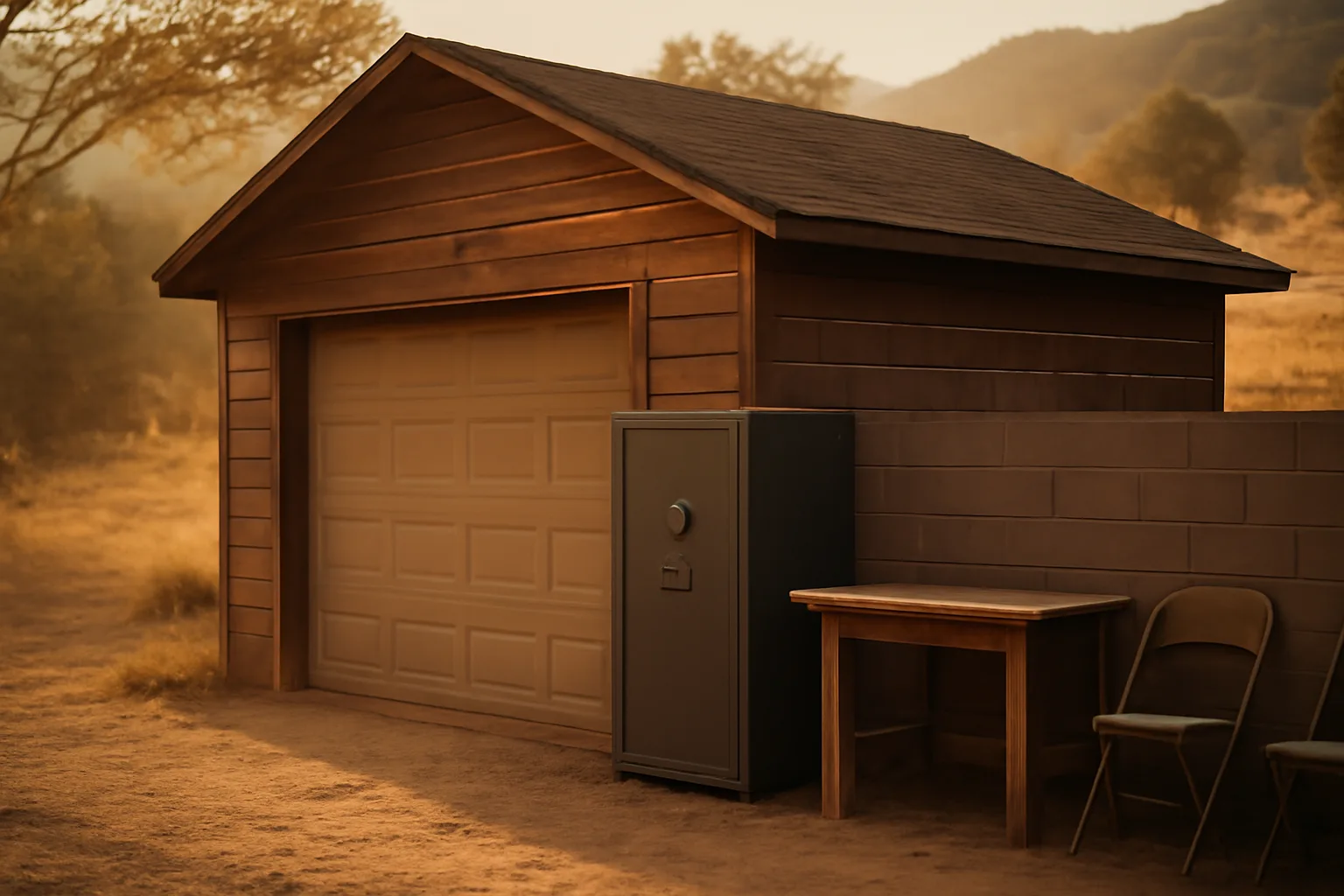
TL;DR
Colorado does not run a state firearms dealer board. A home-based FFL is a federal Type 01 issued by ATF, plus whatever your city allows at a residence. You file ATF Form 7, pay the $200 three-year dealer fee set in 18 U.S.C. 923, clear zoning, and set up CBI InstaCheck. Confirm fees and do not expect a fixed calendar.
Do you need a license for a home-based FFL in Colorado?
Yes. If you want to engage in the business of dealing firearms from a Colorado house, you need a federal firearms license. Colorado does not issue a replacement license and it does not waive the federal one.
The Gun Control Act makes it unlawful to deal without that license. 18 U.S.C. 923 is the statute that creates the license, the fee, and the premises rule. ATF is the agency that takes Form 7, runs the background work, and sends an Industry Operations Investigator to the address you listed. [1]
People mix this up with a hobby. Buying, selling, and trading for a personal collection is not the same as standing ready to deal with the public. If you hold yourself out as a source of firearms, take orders, keep inventory for resale, or run transfers as a business, you are in dealer territory. ATF looks at the facts, not the name on your Instagram.
Colorado still matters. It just does not sit in the license chair. After ATF issues the FFL, you run Colorado transfers through the Colorado Bureau of Investigation Instant Criminal Background Check Unit, not through FBI NICS as a default. CBI is the point of contact for those checks. [7]
You also need a premises the law will tolerate. A spare bedroom is fine with ATF only if local zoning and any home occupation rules let a firearms business live there, and only if you can produce the books and the inventory when an investigator shows up. A license on paper with a banned use at that address is a dead application.
I would not spend a dollar on signs, a website, or inventory until you can say yes to three things. Federal license path is clear. Your city or county will allow the use. You can give ATF access to the actual room or building where the firearms will sit.
Is there a Colorado FFL board you apply to?
No. There is no Colorado firearms dealer board, no state FFL card, and no Denver hearing that replaces ATF. Search results that talk about a home-based FFL board in Colorado are borrowing language from states that actually run an extra license layer.
California is the clean contrast. That state adds its own dealer paperwork on top of ATF. Colorado does not. home-based FFL in California is a different stack. Colorado looks more like Arkansas, which also has no state board.
What you will meet instead is a pile of ordinary civil paper. A city business license in some towns. A home occupation registration. A sales tax account with the Colorado Department of Revenue if you are selling tangible goods. A possible county use-tax wrinkle. None of those agencies issue the FFL. [10]
ATF still mails or otherwise delivers a copy of your application to the local chief law enforcement officer. That is a notice rule, not a Colorado board vote. Your sheriff cannot “approve” a Type 01 the way a liquor board approves a tavern. The sheriff can tell ATF the address violates a local ordinance. That is enough to sink the file.
If someone sells you a “Colorado FFL board packet,” walk away. The real path is ATF Form 7, fingerprints, photos, the CLEO copy, a premises that can pass an inspection, then CBI dealer setup after the license prints. [3]
How much does a home-based FFL cost in Colorado?
The only federal number I will put in ink is the Type 01 original fee in the statute. 18 U.S.C. 923 sets a dealer fee of $200 for three years (renewal is listed separately in the same section). Confirm the live fee block on ATF Form 7 before you pay, because that is the number ATF will cash. [1] [2]
Everything else is local or optional, and I will not invent it.
Fingerprints and passport-style photos are real costs. How much depends on which sheriff, police department, or private shop rolls the cards. Postage for the CLEO copy is pocket change. A bound book can be a paper ledger. Software is optional until volume makes paper stupid.
Colorado does not charge a state dealer license, because it does not issue one. You may still owe a municipal business license. Some Front Range cities treat any home occupation as a paid registration. Unincorporated counties can be cheaper and slower to explain themselves. Call planning and the finance desk. Get the fee in writing.
If you sell, you need a Colorado sales tax account. The Department of Revenue publishes the registration steps. Confirm whether your city piggybacks a local license on that account. Do not guess a dollar figure from a blog. [10]
An LLC is optional. It does not impress ATF. It can split personal assets from the shop if you keep the formalities. Confirm the current articles of organization fee on the Colorado Secretary of State schedule before you file. I would not form an entity just to feel official.
The cost people undercount is the premises. A decent safe, a door that locks, and a way to keep a roommate or a kid out of the inventory. Homeowner policies often exclude business property and firearms held for sale. Price a separate policy before you stack serial numbers in a closet.
Transfers will also carry CBI’s check fee once you are live. CBI publishes dealer information and the current check process. Confirm that number with CBI, not with a forum screenshot. [8]
Waste of money, in my view: rush “approval guarantee” consultants, neon storefront buildouts in a residential driveway, and buying $4,000 of used pistols before the IOI has walked the room.
How long does a home-based FFL take in Colorado?
Nobody honest will hand you a fixed date. 18 U.S.C. 923(d)(2) says, in the statute’s own words, “The Attorney General must approve or deny an application for a license within the 60-day period beginning on the date the application is received.” That clock runs on a complete application. Incomplete fingerprints, a bad photo, a premises fight, or a delayed interview take you off that clean clock. [1]
Plan the work in layers, not in a single ATF day count.
Zoning and home occupation come first. Some Colorado planning desks answer in a week. Some want a hearing. A homeowners association covenant can take longer than ATF if the board only meets monthly. I start here because a “no” from the city makes the federal fee a donation.
Form 7 itself is not a weekend novel. Responsible persons, prior addresses, mugshot-quality photos, fingerprint cards, and the exact premises description. eForms is how ATF wants a lot of this now. Confirm the current intake method on ATF’s applications page before you print a ream of paper. [3] [12]
The IOI visit is the wildcard. Rural Colorado can mean a long drive for the investigator and a longer wait for a date. Denver metro can mean a packed schedule. They will want to see where the books live, where the firearms live, and that they can get in during the business hours you listed.
After the license issues, you still are not taking money. CBI has to recognize you as a dealer for InstaCheck. Sales tax, if you need it, should already be in motion. I treat “license printed” and “first legal transfer” as two different finish lines.
If a vendor quotes a fixed number of days to a Colorado home FFL, they are selling comfort. Confirm status with ATF. Confirm CBI enrollment with CBI. Confirm the occupancy paper with the city that can ticket you.
What does ATF actually check at a Colorado home premises?
ATF is checking that you are not prohibited, that you told the truth on Form 7, and that the place you named can function as licensed premises. They are not scoring your granite countertops.
Expect a walk-through of the room or building you listed. Expect questions about hours, who else has keys, and how a stranger would (or would not) know guns are sold there. 27 CFR 478.23 is blunt about access. It says ATF officers “may enter during business hours the premises, including places of storage, of any licensee for the purpose of inspecting or examining any records or documents required to be kept” and the firearms stored there. [5]
If you cannot let them in without waking a sleeping toddler every time, you have a premises problem. If the inventory is in a locked box in a shared closet and your roommate has the only key, you have a control problem.
They will talk through the acquisition and disposition record. Paper is legal. A computer bound book is legal if you can print and if you keep it the way the regulations require. 27 CFR 478.121 is the general records rule. You will live in Subpart H after you open. [6]
Zoning is part of the federal file even though ATF did not write your city code. If the use is unlawful at that house, ATF has no reason to hand you a license so you can break local law on day one.
I would put a simple sketch of the house in your own notes. Mark the safe, the door an investigator will use, and where Form 4473s will sit. You will not mail that sketch unless they ask. You will be glad you thought it through when they do.
Can you run a Type 01 from a house in Denver or Colorado Springs?
Maybe. The federal answer is yes if local law allows it and you can comply with the Gun Control Act at that address. The local answer is a planning and zoning question, and it changes by city, by zone district, and sometimes by HOA.
I will not pretend I audited every Colorado municipal code last night. Denver, Boulder, and some home-rule cities are picky about home occupations, retail traffic, and firearms as a listed use. Colorado Springs, Aurora, Fort Collins, Lakewood, and the mountain towns each write their own list. Unincorporated El Paso, Jefferson, Adams, Arapahoe, Douglas, Larimer, Mesa, and Pueblo counties are not copies of each other.
Pull the home occupation section and the use table for your parcel. Look for words like retail sales, wholesale, warehousing, ammunition, and firearms. If the table is silent, ask planning in writing whether a federal firearms dealer at a residence is allowed, allowed with a permit, or forbidden. Keep the email.
Parking and customer traffic kill more home files than the word “gun.” If your plan is a showroom with weekend browsers, you are describing a store. If your plan is appointment-only transfers and shipped-in acquisitions, you are closer to what a residence can absorb. Be honest on Form 7 about hours. Lying about “by appointment” when you mean “open Saturday for the neighborhood” is how people earn a denial or a later citation.
Neighbors matter more than ATF admits in the brochure. A single complaint can trigger a zoning officer. That is not a reason to hide the business. It is a reason not to run a parking lot on a cul-de-sac.
Idaho’s home-based path and Arizona’s are useful comparisons if you are used to mountain-west land-use habits. They still are not Colorado. Read your own code.
What Colorado state rules hit a home FFL after you are licensed?
Once the FFL is in your hand, Colorado law starts to show up on every transfer, not on a board application.
CBI InstaCheck is the daily one. Colorado is a point-of-contact state. Licensed dealers initiate the state check through CBI’s process. Confirm dealer enrollment, hours, and the current check fee on CBI’s Instant Criminal Background Check Unit and firearm dealer pages before you advertise a transfer price. [7] [8]
Private-party transfers are a real traffic source here. Colorado requires most private firearm transfers to run through a licensed dealer so a background check happens. That is why a quiet home FFL can stay busy without a storefront. It is also why your 4473 habits have to be clean from day one.
Colorado added a waiting period in HB23-1219. The bill page is the primary source. Read the current statute text before you promise same-day carry-out, because the waiting period is not a federal rule and it is not optional because you work from a basement. Confirm the live rule, including any exceptions, in the Colorado Revised Statutes as they read on the day you open. [9]
Sales tax is ordinary retailer law. If you sell a firearm, a fee, or shop goods, you are in Department of Revenue territory. Transfers done as a service still need a written tax position. I am not your tax lawyer. I would ask a Colorado CPA who has actually filed for a dealer, not a gun-group Facebook thread. [10]
City rules can still land after ATF is done. Sign codes. Storage. Discharge. Shipping from a residential address. If you later add NFA items, you pick up a whole second federal stack. Do not treat a Type 01 home shop as a Type 07 factory or an SOT campus.
None of this is a Colorado FFL board. It is the operating environment.
What paper do you keep in the first year from a Colorado house?
The first-year paper is federal, then Colorado, then whatever your city piled on.
Federally you keep the license posted or available as required, the A&D bound book, each Form 4473, multiple-handgun sale reports when they apply, and theft or loss reports if that awful day comes. 27 CFR 478.121 and the rest of Subpart H are the home you live in. ATF’s Form 4473 page is where the current form lives. Use the current one. Old PDFs from a forum will bite you. [6] [11]
You also keep the application file. A copy of Form 7, the photos, the fingerprint receipts, the CLEO proof, and any zoning letter. When an IOI asks how you got here, you hand them a folder, not a story.
Colorado adds CBI records around each check. Keep whatever approval, delay, or deny documentation CBI tells dealers to retain. If you run a private-party transfer, keep the paperwork that shows you actually processed it as a dealer, not as a buddy with a stamp.
City copies are boring and you should still keep them. Home occupation approval. Business license. Sales tax license. Lease or deed that proves you control the premises. HOA approval if you needed one.
I like a fire-resistant box for 4473s and a second copy of the bound book backup if you are electronic. That is preference, not a secret regulation.
If you want the federal forms and first-year paper in one stack, FFLPath sells a $199 one-time Home-Based Type-01 Packet at /start. That is optional. This page stands alone without it. FFLPath is an independent publisher, not a law firm and not a filing service.
Do you need an LLC, a storefront, or a special Colorado dealer badge?
No special Colorado dealer badge exists. A storefront is not a federal requirement. An LLC is a business choice, not an ATF checkbox.
ATF licenses a premises and responsible persons. It will license a living room if the city allows the use and you can comply. Plenty of Type 01s run by appointment from a garage with no walk-in traffic. Plenty of denials start when someone claims a residence and then builds a retail floor anyway.
A storefront helps if you want display cases and impulse traffic. It also drags you into commercial lease, commercial insurance, ADA, and a different zoning map. For a first-year home-based FFL in Colorado, I would earn the transfer and special-order muscle first. Rent retail after the books prove you need the door.
An LLC can help with contracts and liability if you keep your personal account out of the shop. It will not hide you from ATF. Responsible persons still get fingerprinted. Straw-man corporate theater is a waste of money.
Sales tax registration is the state piece people actually need if they sell. That is a Department of Revenue account, not a gun board. Confirm the current CR registration process on the DOR how-to page. [10]
If you outgrow the house, you file a change with ATF and you re-check zoning. Do more than move the safe to a rented bay and keep using the old license address. That is how people earn a willful violation.
How does a Colorado home FFL compare with nearby states?
Colorado’s federal core is the same as every other state. Form 7, $200 Type 01 original fee under 18 U.S.C. 923, premises, IOI. The difference is the state overlay, and Colorado’s overlay is checks and transfer rules, not a dealer board. [1]
Arizona is often simpler on private transfers and does not copy Colorado’s waiting-period statute. Idaho is closer to a federal-only daily rhythm. Alaska is federal plus very local logistics. Florida has its own waiting-period tradition and a different county map. California remains the heavy state-license example.
| Layer | Colorado home FFL | What to confirm |
|---|---|---|
| Federal Type 01 | Required | Form 7 fee block and ATF intake |
| State dealer board | None | Do not pay anyone for a fake board filing |
| Background checks | CBI InstaCheck | Dealer enrollment and per-check fee |
| Extra transfer rules | Waiting period and private-party dealer processing | Current CRS text and HB23-1219 |
| Local permission | Zoning and home occupation | City or county planning letter |
| Tax account | DOR sales tax if you sell | tax.colorado.gov registration |
The comparison that matters inside Colorado is city versus county. A detached house in unincorporated Mesa County is not a townhouse in Boulder. Same FFL type. Different odds that planning says yes.
Nobody has a public, clean dataset of home-FFL approval rates by Colorado county. ATF does not publish that cut in a way you can underwrite a business plan on. The closest honest method is still a zoning letter plus a complete Form 7.
What should you do first this week if the house is the shop?
Call planning. Not ATF. Not CBI. Planning.
Ask whether a federal firearms dealer, by appointment, at your specific address, is an allowed home occupation, a permitted use, or a prohibited use. Get the answer in writing. If they need a hearing, get the hearing calendar. If an HOA runs your street, read the covenants the same day.
While that email is out, make a premises plan you can live with. One lockable room or outbuilding. A safe that actually shuts. Hours you can staff. A door ATF can use without wandering through a teenager’s bedroom.
Download the current Form 7 instructions from ATF and read the responsible person pages twice. List every adult who can control the inventory. Leaving a spouse off the form because “they are not into guns” is a classic bad idea if they have a key. [3]
Price fingerprints locally. Confirm whether your police department still rolls FD-258 cards for ATF. Confirm eForms versus paper on ATF’s applications page. [12]
Do not buy inventory. Do not take a customer’s pistol “to hold.” Do not advertise transfers. You are not a dealer yet.
If the city says no, stop. Change addresses, change the business model, or drop the plan. Paying ATF to inspect a forbidden house is how people get salty and then blame a board that does not exist.
What is a waste of money on a Colorado home-based FFL?
Guaranteed-approval packages. Nobody can sell you ATF’s signature.
A full retail remodel in a residential garage. You will annoy the city and you will not recoup the epoxy floor on $50 transfers.
A Type 07 you do not need. Manufacturing is a different license and a different inspection conversation. If you are doing transfers and used-gun turns, Type 01 is the tool.
A Type 03 collector license if your plan is dealing. C&R is not a starter dealer license. It is a collector license. Using it as a loophole is how people write letters they hate writing.
Custom neon, logo wrap on the family SUV, and a lobby coffee bar. Save it.
I would spend on a safe, a zoning letter, correct fingerprints, and time to fill Form 7 without typos. That list is dull. It is also what actually shows up in the file.
Where does a home-based FFL in Colorado actually start?
It starts as a federal license on a locally legal premises. There is no home-based FFL board in Colorado. There is ATF, there is your city or county, and there is CBI after you are licensed.
Read 18 U.S.C. 923 so you know what you applied under. Read your zoning use table so you know whether the house can carry the use. Read CBI’s dealer page so you know how a Colorado transfer will run. Confirm every fee on the issuing office’s own page. [1] [7] [8]
I would rather you take two extra weeks on zoning than file a pretty Form 7 for an address that cannot host the business.
The $199 Home-Based Type-01 Packet at /start is there if you want FFLPath’s paper kit. Use it or ignore it. The statutes and the city counter are the path either way.
Frequently asked questions
Do you need a license for home-based FFL in Colorado?
Yes. Dealing firearms from a Colorado home requires a federal FFL from ATF, usually a Type 01. Colorado does not issue a state dealer license that replaces it. You still must follow local zoning and, after licensure, CBI InstaCheck rules. Hobby collecting without engaging in the business is a different fact pattern.
How much does home-based FFL cost in Colorado?
The Type 01 original federal fee in 18 U.S.C. 923 is $200 for three years. Confirm the live Form 7 block before you pay. Add fingerprints, photos, any city business or home occupation fee, optional entity filing, a safe, and insurance. Colorado has no state FFL fee. CBI check fees apply later. Confirm locals with the city and CBI.
How long does home-based FFL take in Colorado?
18 U.S.C. 923(d)(2) gives 60 days to approve or deny a complete application. Real calendars run longer when fingerprints, zoning, or the IOI visit lag. Colorado has no separate board clock. Confirm status with ATF and do not buy a fixed date from a vendor.
Can an HOA stop a home-based FFL in Colorado?
Yes, as a private-covenant problem. ATF cares whether the activity is lawful under state and local law, not whether your HOA likes commerce. A covenant can still fine you, lien the house, or sue. Read the CC&Rs before you file Form 7. Get written HOA approval if the documents require it.
Do I have to tell my sheriff about a home FFL?
ATF requires a copy of the application to go to the local chief law enforcement officer. In much of Colorado that is the municipal police chief or the county sheriff. That is notice, not a sheriff’s license vote. A CLEO can still flag an illegal premises. Follow the current Form 7 instructions for how that copy is delivered.
Is a Type 03 collector license enough to deal from home?
No. A Type 03 is a curios and relics collector license. It is not a dealer license. If you are engaging in the business of dealing firearms, you need the correct dealer type, usually Type 01. Using C&R paperwork as a cheap dealer workaround is a bad plan and a fast way to meet ATF on worse terms.
Can I keep the inventory in a detached garage?
Often yes if that building is part of the licensed premises you described, you control it, ATF can inspect it during business hours, and zoning allows the use. List the storage location accurately on the application. A garage on a neighbor’s lot, or a unit you do not control, is not your premises.
Do I call NICS or CBI for a Colorado transfer?
Colorado dealers use the Colorado Bureau of Investigation Instant Criminal Background Check Unit for in-state dealer transfers. Colorado is a point-of-contact state. Confirm current dealer enrollment and the check process on CBI’s own pages before you run your first 4473. Do not improvise from an old NICS-only tutorial.
Does Colorado’s waiting period apply to a home FFL?
Treat it as applying to covered sales until you read the current statute. HB23-1219 created Colorado’s waiting period. Working from a basement does not create a home-business exemption. Confirm the live rule, timing, and any exceptions in the Colorado Revised Statutes before you advertise same-day pickup.
Will ATF inspect the whole house?
They inspect the licensed premises and storage you identified, during business hours, including records and firearms. 27 CFR 478.23 is the entry rule. If inventory or books bleed into unmarked rooms, those rooms become part of the problem. Keep the business footprint tight and match what you drew on the application.
Do I need video cameras or an alarm?
Federal regulations do not publish a camera mandate for a Type 01 home shop. ATF still cares about theft risk and your ability to account for every serial number. An alarm and a real safe are judgment calls that insurance companies also care about. I would buy a safe before I bought a camera cloud plan.
Can I run NFA items from a Colorado home FFL?
A Type 01 does not, by itself, make you an SOT manufacturer or a destructive-device dealer. NFA work has its own tax stamp, registration, and often a different license type. Local zoning that barely tolerates a quiet Type 01 may reject NFA traffic. Confirm ATF type, 27 CFR Part 479, and the city use table before you advertise silencers.
What if I live in unincorporated Colorado, not in a city?
You still need the federal FFL. Zoning comes from the county land-use department instead of a city hall. Some counties are quiet on home occupations. Some still ban retail or firearms uses in residential zone districts. Call the county planner for your parcel ID and get the answer in writing before you pay ATF.
Sources
- U.S. House Office of the Law Revision Counsel, 18 U.S.C. § 923: Federal dealer licensing, the Type 01 fee structure, the 60-day approve-or-deny period, and the licensed-premises requirement
- eCFR, 27 CFR 478.42 License fees: ATF regulation that implements GCA license fees applicants pay
- ATF, Apply for a License: Applicants obtain an FFL by filing ATF Form 7 or 7CR through ATF’s published process
- eCFR, 27 CFR 478.44 Original license applications: Original FFL applications are filed as prescribed by ATF, including the information ATF requires to issue a license
- eCFR, 27 CFR 478.23 Right of entry and examination: ATF officers may enter licensed premises and storage during business hours to inspect required records and firearms
- eCFR, 27 CFR 478.121 General records requirement: Licensees must keep the firearms records ATF requires under Subpart H
- Colorado Bureau of Investigation, Instant Criminal Background Check Unit: CBI operates Colorado’s firearm instant criminal background check program used for dealer transfers
- Colorado Bureau of Investigation, Firearm Dealers: CBI publishes dealer-facing InstaCheck enrollment and operating information
- Colorado General Assembly, HB23-1219: Colorado enacted a firearm purchase waiting period in HB23-1219
- Colorado Department of Revenue, How to register a sales tax account: Retailers register a Colorado sales tax account through the Department of Revenue process
- ATF, Form 4473 Firearms Transaction Record: Dealers complete the current ATF Form 4473 on over-the-counter transfers
- ATF, Applications via eForms: ATF directs many FFL applications through its eForms system